How the system you choose changes the bill
The membrane or system on a flat roof is the biggest single lever on the price, and each common option brings a different balance of cost and performance for a South Bend business. Choosing well means matching the system to your building and budget rather than defaulting to one.
TPO, the value choice
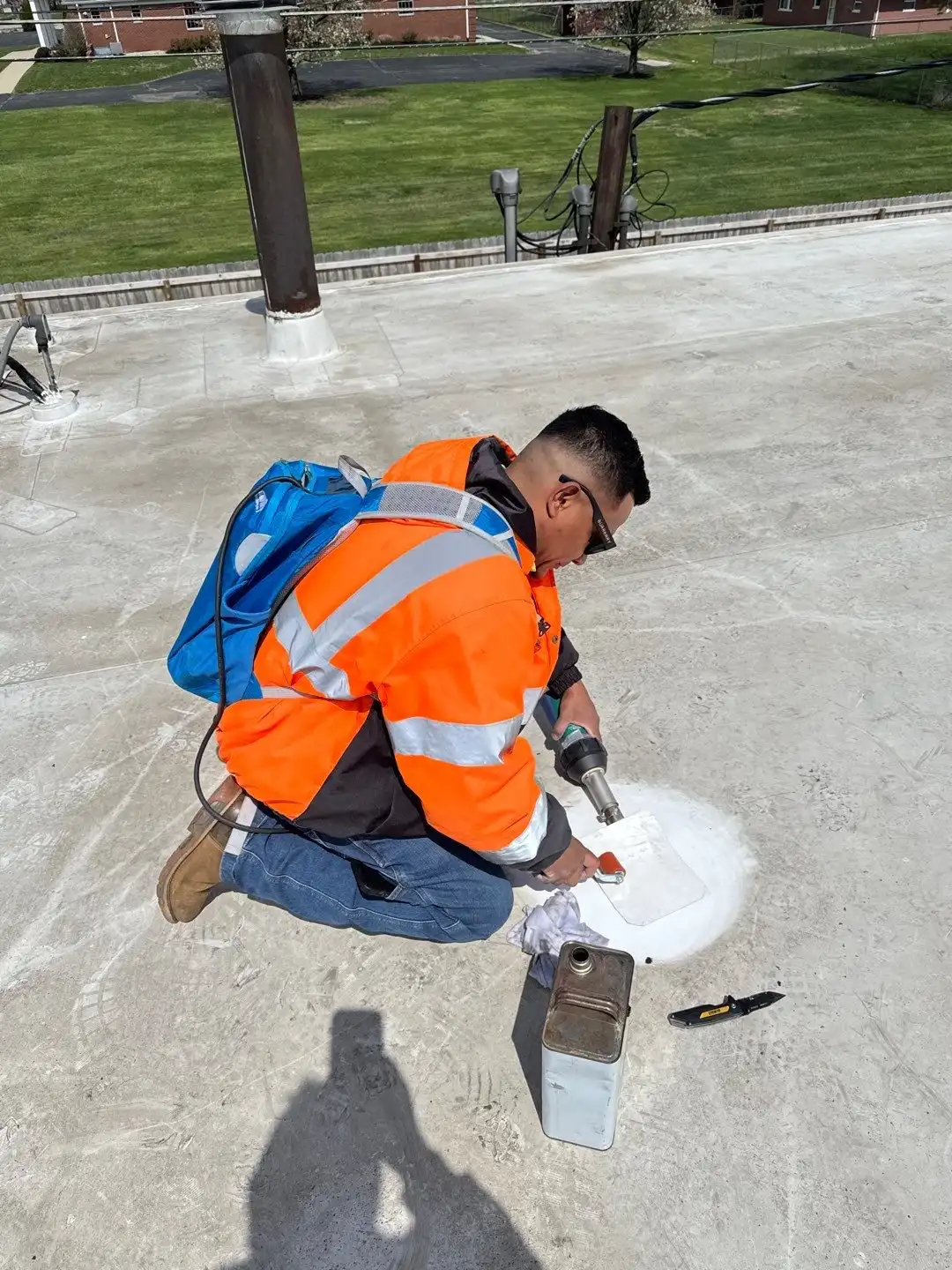
TPO is the most installed flat roof membrane, largely because it carries the lowest installed cost of the single ply options and its reflective white surface helps with cooling a St. Joseph County building in summer. For a business prioritizing a sound roof at a reasonable price on a clean, simple flat roof, TPO is often the answer. The caution is that quality varies by manufacturer, so a low price should still come with a reputable product and skilled welding.
EPDM, the proven rubber
EPDM, the black rubber membrane, has decades of history on flat roofs and handles cold and freeze thaw well. It sits near TPO on cost, sometimes a touch higher or lower depending on the project. Its black surface absorbs heat rather than reflecting it, which can raise cooling costs, so it suits a business that values track record and cold performance over summer energy savings on its flat roof.
PVC, the premium option
PVC costs more than TPO or EPDM, but it resists grease, chemicals, and ponding water, which makes it the right choice for a South Bend restaurant, food service, or process building, or any flat roof with chronic ponding. On those buildings the premium is not optional, because the cheaper membranes degrade under that exposure and fail early. On a clean roof without that exposure, the premium may not be worth it.
Modified bitumen and built up
Modified bitumen and traditional built up roofing are multi ply asphalt based systems with a long history on flat roofs. They sit in the middle of the cost range and offer good durability, with the price reflecting the number of plies and the installation method. For some St. Joseph County buildings, particularly those with heavy foot traffic, a multi ply system is a sensible, cost effective choice.
Matching the system to the budget and building
The right system balances what your building needs against what your budget allows. A grease exposed roof needs PVC regardless of cost. A clean, cost driven roof leans TPO. A roof valuing proven cold performance leans EPDM. A high traffic roof might choose a multi ply system. The mistake is choosing on price alone and putting the wrong system on a building that needed a different one, which costs more when it fails early on your roof.
Get a system recommendation that fits
None of these factors is meant to make the decision daunting, because in practice an honest inspection sorts most of it out quickly. The value of understanding the cost drivers is that a business can recognize a fair quote, question an outlier, and budget with confidence rather than guessing. A flat roof replacement handled with that clarity becomes a manageable, well planned project instead of a confusing and stressful one, which is exactly what you want from an expense of this size.
It also helps to remember that the cheapest flat roof on installation day is frequently not the cheapest over its life, because a thin build or the wrong system for the building fails early and forces another expense. A St. Joseph County business that weighs total cost, including the system's service life, the energy performance, and the quality of the installation, makes a decision that holds up far better than one based on the lowest bid alone. The roof over your business is worth that fuller comparison.
The broader point is that a flat roof replacement rewards a business that treats it as a planned investment rather than a distress purchase. A South Bend owner who understands the cost drivers, gets the roof inspected, and compares quotes on substance ends up with a roof that protects the building for decades at a fair price. The difference between that outcome and an expensive scramble is almost always whether the decision was made with real information or under pressure, which is why the upfront work pays off.
None of these factors is meant to make the decision daunting, because in practice an honest inspection sorts most of it out quickly. The value of understanding the cost drivers is that a business can recognize a fair quote, question an outlier, and budget with confidence rather than guessing. A flat roof replacement handled with that clarity becomes a manageable, well planned project instead of a confusing and stressful one, which is exactly what you want from an expense of this size.
It also helps to remember that the cheapest flat roof on installation day is frequently not the cheapest over its life, because a thin build or the wrong system for the building fails early and forces another expense. A St. Joseph County business that weighs total cost, including the system's service life, the energy performance, and the quality of the installation, makes a decision that holds up far better than one based on the lowest bid alone. The roof over your business is worth that fuller comparison.
The broader point is that a flat roof replacement rewards a business that treats it as a planned investment rather than a distress purchase. A South Bend owner who understands the cost drivers, gets the roof inspected, and compares quotes on substance ends up with a roof that protects the building for decades at a fair price. The difference between that outcome and an expensive scramble is almost always whether the decision was made with real information or under pressure, which is why the upfront work pays off.
None of these factors is meant to make the decision daunting, because in practice an honest inspection sorts most of it out quickly. The value of understanding the cost drivers is that a business can recognize a fair quote, question an outlier, and budget with confidence rather than guessing. A flat roof replacement handled with that clarity becomes a manageable, well planned project instead of a confusing and stressful one, which is exactly what you want from an expense of this size.
The broader point is that a flat roof replacement rewards a business that treats it as a planned investment rather than a distress purchase. A South Bend owner who understands the cost drivers, gets the roof inspected, and compares quotes on substance ends up with a roof that protects the building for decades at a fair price. The difference between that outcome and an expensive scramble is almost always whether the decision was made with real information or under pressure, which is why the upfront work pays off.
South Bend Commercial Roofing reads your South Bend building's exposure, use, and budget and recommends the flat roof system that fits, then prices it honestly, so you are not oversold a premium system you do not need or undersold a cheap one that will not last. Call (765) 676-3491 to get a system matched to your building and a real price for it. The right match is what separates a smart spend from an expensive guess.